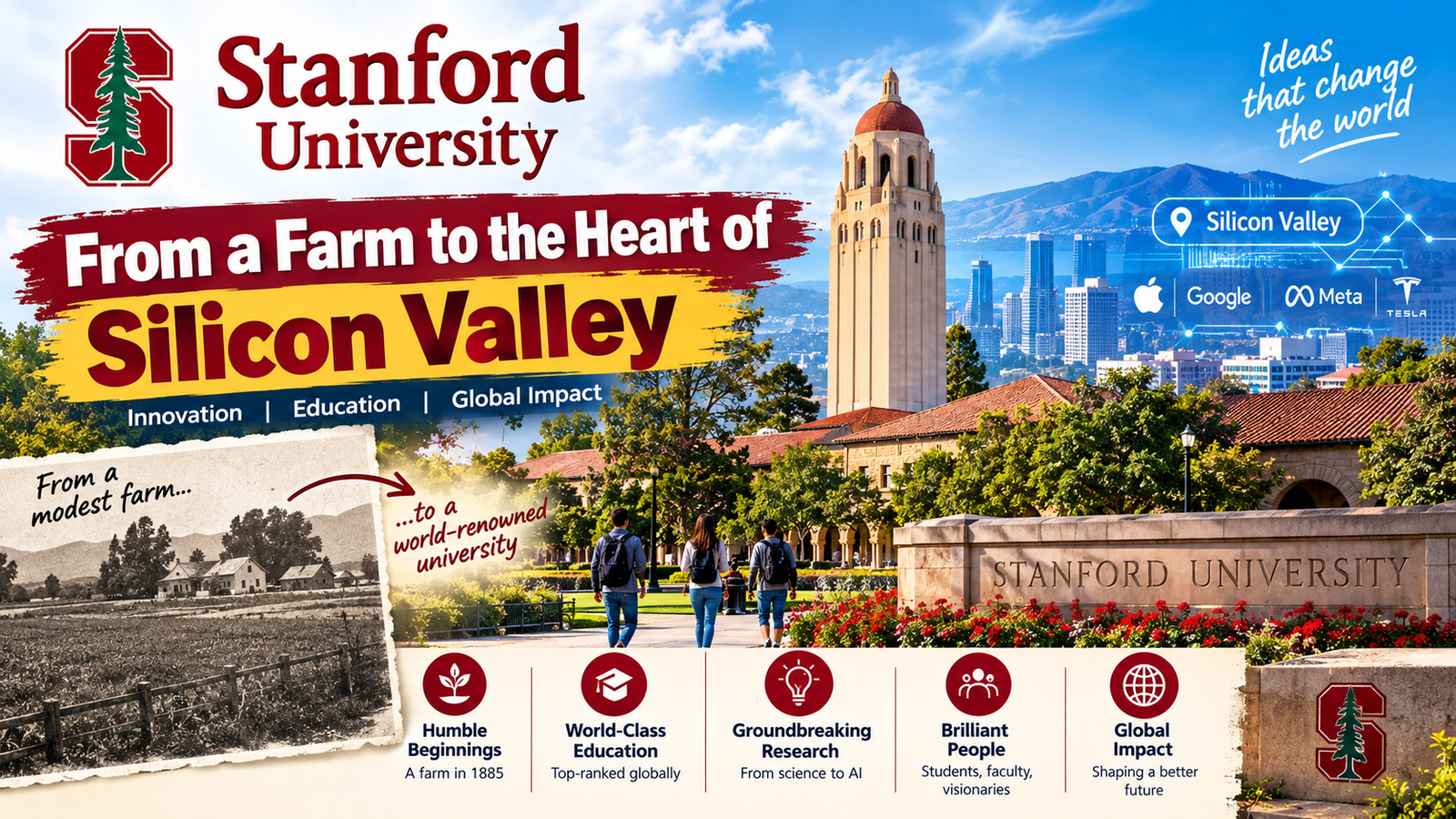
Stanford made the single biggest jump of any top-ranked university in the 2026 QS World University Rankings, climbing from sixth place all the way to third. That’s not a small move at this level — universities at the very top tend to stay locked in place for years, sometimes decades. So what changed, and why does Stanford keep producing so much influence relative to its size?
From Railroad Fortune to Research Giant
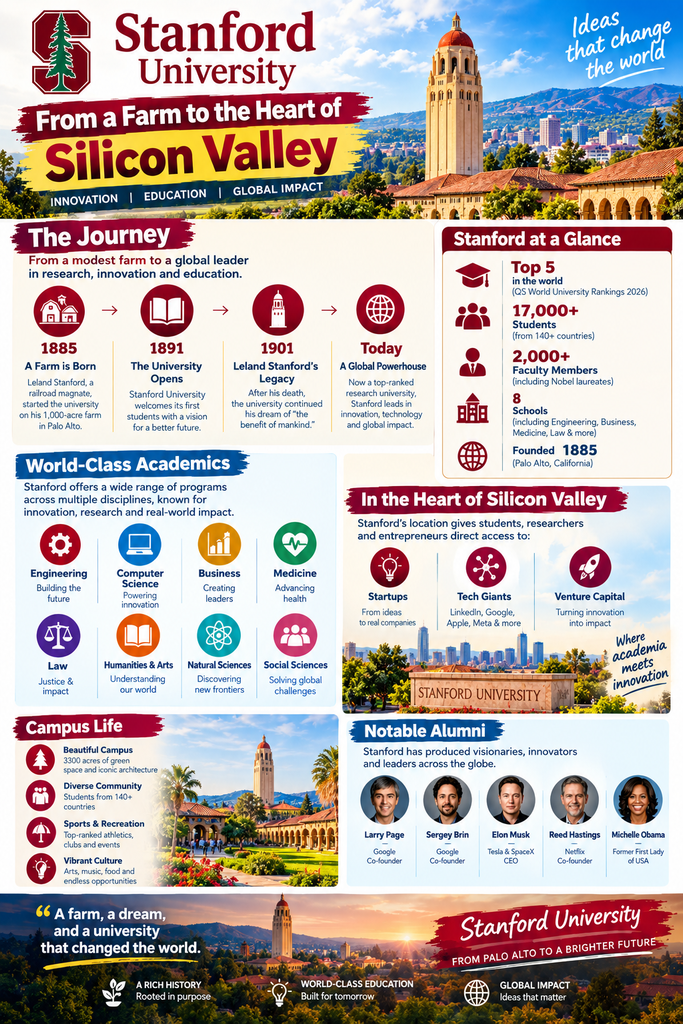
Stanford opened its doors in 1885, founded by California railroad magnate Leland Stanford and his wife Jane in memory of their son, who died young. The land it sits on used to be a working farm — locals still call the campus “the Farm” today, a nickname that’s stuck for over a century.
Its location turned out to be everything. Palo Alto sits at the geographic center of what eventually became Silicon Valley, and Stanford’s proximity to that tech ecosystem shaped the entire identity of the school. Faculty and graduates didn’t just study technology here — they built the companies that define it.
Academic Range
Unlike Imperial’s narrow STEM focus, Stanford covers nearly everything — law, medicine, business, humanities, engineering — and does it at a high level across the board. A few areas particularly stand out:
- Computer Science, arguably the strongest program of its kind anywhere in the world
- The Graduate School of Business, producing an outsized share of startup founders and venture capitalists
- Engineering broadly, with deep ties to companies like Google, HP, and Nvidia — all founded by Stanford alumni or faculty
- Law and Medicine, both consistently ranked among the top programs in the United States
Why the Ranking Jumped
Stanford’s climb in the 2026 rankings came largely from improvements in sustainability metrics and international faculty numbers — two categories QS has weighted more heavily in recent editions. Add in Stanford’s already-dominant research citation numbers and employer reputation scores, and the jump from sixth to third starts to make sense rather than looking like a fluke.
Getting Admitted
Stanford’s acceptance rate sits below 4%, making it one of the hardest schools in the world to get into. The application process weighs essays and extracurricular depth heavily, on top of academic performance — Stanford has been fairly open about wanting students who show genuine intellectual curiosity rather than just a strong transcript.
International applicants face the same review process as domestic ones, and the university has steadily increased its share of students coming from outside the US over the past decade.
Campus and Culture
Stanford’s campus is enormous — over 8,000 acres, making it one of the largest university campuses on the planet. That space translates into a culture that leans outdoorsy and relaxed compared to the intensity of East Coast schools, even though the academic pressure underneath is just as real.
Alumni include Google co-founders Larry Page and Sergey Brin, Nike founder Phil Knight, and a long list of tech CEOs and politicians. Few universities anywhere can claim to have shaped an entire regional economy the way Stanford shaped Silicon Valley.
The Research-to-Startup Pipeline
Few universities anywhere have turned research directly into industry the way Stanford has. Faculty and graduate students here aren’t just encouraged to commercialize their work — it’s practically built into the culture. The university’s Office of Technology Licensing has helped launch thousands of startups over the decades, and Stanford routinely takes small equity stakes in companies built on research that started in its labs, which has, over time, fed real money back into the university itself.
This pipeline is most visible in computer science and bioengineering, where professors frequently split time between teaching and running or advising companies. It creates a slightly unusual dynamic compared to more traditionally academic institutions — a Stanford class might be taught by someone who’s also, at the same time, running a company backed by tens of millions in venture funding.
Tuition, Cost, and Financial Aid
Stanford’s total cost of attendance sits in a similar range to its Ivy League peers, north of $85,000 a year including housing and fees. Like Harvard and MIT, Stanford runs a need-blind admissions process for domestic students and meets full demonstrated financial need for every admitted student. Families earning under $150,000 a year generally pay no tuition, and those under $100,000 typically have room and board covered as well.
International students go through a separate, need-aware review for financial aid purposes, though Stanford still commits to meeting full demonstrated need for any international student it admits — a policy not every top-ranked university outside the US can match.
Stanford Compared to Its Nearest Competitors
The comparison with MIT comes up constantly, and it usually comes down to atmosphere rather than academic strength — Stanford’s huge, spread-out campus and mild California weather create a noticeably different daily experience than MIT’s dense, urban setup in Cambridge, Massachusetts. Students who want closer proximity to venture capital and startup culture tend to lean toward Stanford, while those who want to be embedded in a slightly more traditional, research-heavy East Coast environment often prefer MIT.
Against Harvard, the difference is sharper. Harvard’s strength runs through law, government, and the humanities alongside its sciences, while Stanford leans harder into engineering, computer science, and entrepreneurship. Both are exceptional across the board, but the “center of gravity” at each school points in a noticeably different direction.
Notes for Prospective Applicants
Stanford’s application places unusually heavy weight on its short answer questions and essays, more so than many peer institutions. Admissions officers have repeatedly said they’re looking for authentic voice over polish, and that generic essays about “passion for innovation” tend to blend together and get forgotten quickly. Specific stories, even small ones, tend to stand out far more.
It’s also worth knowing that Stanford’s REA (Restrictive Early Action) program is non-binding, unlike Harvard’s similar early program, which gives admitted early applicants more flexibility to compare offers before committing.
The Takeaway
Stanford’s rise to third place isn’t a temporary blip — it reflects decades of deliberate investment in research, faculty recruitment, and a location that keeps feeding the university fresh energy from the tech world right outside its gates. For students chasing both academic prestige and proximity to where technology gets built, it’s hard to find a better match anywhere on the list.